 |
 |
| |
| HOW TO BECOME A POLICE STATION REP | | Becoming a police station rep is not difficult and nearly anyone can do it. Its a great job and an important part of the criminal defence procedure. If you want to learn about how to become a rep do please read the whole page. If you have any questions feel free to get in touch. | | Last Updated: 15th February 2019 | | | |
|
| | THE 10 STEPS TO BECOME A POLICE STATION REP:
- Read this page and all the document in the links. Get to know the business, the rules and the requirements before you do anything else. The job of a rep is not for everyone and you need to understand what it entails before you go any further.
- Find a Supervising Solicitor. Without a doubt finding a supervising solicitor is the toughest part of all especially if you are not a policeman or a lawyer.
- Make contact with a few reps in your area. We are a friendly bunch generally. Go out on a few attendances with other reps. We all have our own styles and you'll need to find yours. Watching someone else in action is perhaps the best introduction to the job.
- Register with an Assessment Organisation, complete Part A of the Portfolio and pass the written exam. Apply to the Police Station Reps Service (PSRS) to become a Probationary Representative and get your unique PIN number.
- As a Probationary Rep you can work for 12 months at police stations, on a limited basis, without direct supervision.
- Before the end of that 12 months you need to successfully complete and pass the Critical Incidents Test and Part B of the Portfolio. If you fail to pass, the Criminal Defence Service will suspend you, and your firm will not be paid for work you perform at the police station. You will have to go back to the beginning and start again.
- Once you have done all of that you are a Police Station Representative! Its not hard but you do need to be organised.
- Once you are up and running you need to keep abreast of the law and you need to collect at least 6 CPD points a year.
- If you are confident and capable you may well decide to go freelance. If you do you are then very welcome to register on this site! Best of luck.
- Erm, thats it.
| | Back to Top ↑ |
|
| | WHAT IS A POLICE STATION REPRESENTATIVE?:
Being a Police station representative is perhaps the best job in the world. Admittedly, we are somewhat biased. All the people involved in running this web site are themselves qualified and practicing Police Station Representatives! The job involves: - Giving legal advice to suspects under arrest in police stations.
- Flexibility is a must. Policing is a 24 hour a day business, 365 days of the year. Police Station Representatives therefore often work very unsocial hours. We work at any time of the day and night. As an employee of a firm of solicitors you may have very little choice in the hours you work but as an independent echo representative you can pretty much choose your own hours.
- We are experts in criminal law providing advice to suspects in a clear and unambiguous way. Criminals are not always law echo graduates so we use language that our client's can understand.
- We examine the significance of a client's version of events and give legal advice.
- Analytical skills are a prerequisite.
- An interest in criminal law is a must.
- Good listening skills are essential along with an ability to communicate with people at all levels. The police arrest everyone in society from children to those with severe mental health issues. It is essential that Police station representatives can communicate with anyone.
- Salaries for this type of work were generally pretty high but have been slipping year after year. As an independent rep you could earn anything from £20K to £30K depending on how much work you are prepared to take on. But in house you could be on minimum wage. Solicitors are not the most generous of employers and the hours can be punishing as the police interview 24 hours a day, 7 days a week.
| | Back to Top ↑ |
|
| | HOW TO BECOME A POLICE STATION REPRESENTATIVE:
Anyone can apply to become accredited as a Police Station Representative, with the following exceptions: - Serving police officers
- Special constables and
- Individuals employed in any capacity that may cause a conflict of interest when undertaking Criminal Defence Service work
In order to qualify you will need to find a firm of solicitors to sponsor and supervise you. The Law Society publishes a list of all the firms in England and Wales on their website at www.lawsociety.org.uk. You will need to apply to one of these firms. If you find a job the firm will then be able to help you through the qualification process. Naturally, finding a firm to supervise you is not all that easy as solicitors are facing a real downturn at present. But they will always need people to attend police stations. Once over that hurdle you will need to take a few courses and a few exams. Nothing too hard but you need to demonstrate that you know what you are doing. Training to be a police station representative involves fewer exams than you might expect. You do not need a law degree and you do not have to be a qualified lawyer. But qualified solicitors and barristers are exempt from some of the exams. Before you can work in the industry you must pass the Police Station Representative Accreditation Scheme. It is not hugely expensive and any decent firm of solicitors will stump up the fees and provide training in-house. It typically takes between 6 and 12 months to obtain accreditation.  Standards of Competence Standards of Competence
This document contains an outline of the core information you will need to know. It is a guide to the under pining knowledge, skills and performance expected of reps. | Portfolio assessment Guidelines
The portfolio can be a bit daunting but your supervising solicitor will be able to help. This assesmnet guideline is very useful too. | Cardiff Guidance Notes
This is a useful guide from Cardiff who are one of the providers for course and exams. |
COURSESOnly two organisations are offering the police station accreditation. The contact details are further down the page: - Cardiff and
- Datalaw
If you like some help or guidance please feel free to contact us. We try to answer all emails reasonably quickly. | | Back to Top ↑ |
|
| | FINDING A SUPERVISOR:
Finding a solicitor to supervise your accreditation can be rather difficult. The only advice we can give you is to call, visit and write to local criminal firms. They are always on the look out for good candidates to act as police station reps. You may be tempted to start the training process without a Supervising Solicitor. Our advice is simple: don't do it! We think you should find a Supervising Solicitor first. There is little point shelling out your own money to do a vocational course that will not lead to an income. Once you have a Supervising Solicitor then you know that the courses are worth pursuing. Traditionally the job has been done by former police officers and by lawyers. Both, of course, have contacts with instructing and supervising solicitors. So, it can be a bit tougher for those who are outside the Criminal Justice System. But perseverance is the key. Realistically its a case of badgering the firms until one of them takes you on. In our view you should avoid any firm that asks you to pay for the training and exams yourself. The firms will make a good deal of money training you up so there is no excuse for that sort of exploitation.You can find local firms of solicitors on the law society web site or there is a list of criminal firms below. The list is pretty old now but may well help you get started. It includes the firms name, address telephone number, DX number and e-mail address. We have a jobs page on this site. Do please email us if you would like to advertise for a Supervising Solicitor. | | Back to Top ↑ |
|
| | If you found our site useful please feel free to donate to help us keep it going. | |
| | Back to Top ↑ |
|
| | HOW TO KEEP UP TO DATE:
Keeping Up to Date does not need to be a chore. Criminal Law is a living, breathing and constantly developing area. It is essential for all police station representatives to keep up to date with the law. One of the best ways to keep up to date is to subscribe to the e-mail updates provided CrimeLine. The emails are written by Andrew Keogh. He now has over 12,000 subscribers including criminal lawyers, judges and academics. Each issue provides legal updates including the latest cases, legislation and news. Best of all its FREE!Click here to sign up or point your browser at www.wikicrimeline.co.uk.
| | Back to Top ↑ |
|
|
| CORE KNOWLEDGE: | | There is of course quite a bit you will need to learn. The best way to do this is to work inside a firm a firm of solicitors so that you are exposed to criminal law in all its glory and complexity. But here is the core of what you will need to understand: | | | Defending Clients- ethical rules and principles relevant to advising and assisting a client at the police station
- a solicitor’s or representative’s authority to act for a person detained in the police station
- a solicitor’s or representative’s role and aims when acting for such a client with regard to the probing of the immigration officer’s assessment of a client’s immigration status, representations to be made to the immigration officer and the purpose of the advice to be given to the client
- a solicitor’s or representative’s role and aims when acting for such a client with regard to the probing of the prosecution case, representations to be made to the police and the purpose of the advice to be given to the client
- the effect that detention can have on a client’s behaviour in the police station and appropriate responses to typical behaviour
- how to identify a client’s vulnerability
- how to identify inappropriate behaviour by the police and when and how to respond to it
- the need for accurate records to be made of the information obtained from the police, the instructions obtained from the client, actions taken and advice given to the client
- the need to give consideration to any conflict of interests and the appropriate course of action where a conflict, or significant risk of a conflict of interests is identified.
| Criminal Procedure- basic sequence of events in criminal cases from the client’s arrest/arrival at the police station, to conviction and sentence and the critical factors at each stage
- definition of an arrestable offence
- definition of a serious arrestable offence and the significance of an offence being so classified
- different ways by which crimes may be tried
- meaning of the terms: burden of proof, actus reus, mens rea, intentionally, recklessly, maliciously, dishonestly, knowing or believing, possession
- defence of self-defence
- modes of participation in crime of sole and joint principal and accomplice
- law and procedure relating to young suspects and defendants
- implications of the Human Rights Act 1998 for advice and assistance at the police station.
| Immigration Law- the basis upon which a person can be detained under the Immigration Act or other similar legislation
- the meaning of the terms, overstayer, illegal entrant, asylum seeker, deportee, refugee, exceptional leave to remain
- the main Immigration Act offences
- the basic sequence of events in immigration cases from the client’s arrest/arrival at the police station, to interview, the decision of the immigration officer and detention/release, and the critical factors at each stage.
| Common Crimes- assault occasioning actual bodily harm
- Possessing a controlled drug with intent to supply
- Handling stolen goods
- Possessing an offensive weapon
- Taking a motor vehicle
- Theft
- Affray
- Criminal damage
- Robbery
- Burglary
| Evidence- the legal and evidential burdens of proof as they relate to prosecution and defence
- how facts are proved including the rule against hearsay and its exceptions
- the evidential consequences of a suspect
- remaining silent
- remaining selectively silent
- denying guilt at interviews
- lying
- making a “mixed” statement
- making a confession
- legal professional privilege
- the evidential value of admissions made by a co-accused
- the exclusion of an unreliable confession or evidence obtained unfairly (PACE s.76 and s.78).
| PACE 1984- the search of the client’s premises
- arrest, voluntary attendance at the police station and search upon arrest
- the duties of the custody office before and after the charge
- responsibilities in relation to detained persons
- detention, time limits of detention and reviews
- searches of detained persons
- the right to have someone informed when arrested
- fingerprinting
- the taking of intimate and other samples
- the right to legal advice
- charging
- bail
- the special treatment of juveniles and other vulnerable persons
- the keeping of and entitlement to see the custody record
- documentary evidence
- cautions
- the conduct and tape recording of interviews
- identification procedures.
| | |
|
| Back to Top ↑ |
| | THE PROCESS IN DETAIL:
Lets be frank, the courses are pricey but the exams are relatively easy. The process is a bit bureaucratic and there are deadlines to be met. If you are organised you can complete the whole thing in a weekend but most people take between 6 months and a year to do it. SUMMARY
- Find a Supervising Solicitor.
- Register with an Assessment Organisation.
- Complete part A of the Portfolio and pass the written exam.
- Apply to the Police Station Reps Service (PSRS) to become a Probationary Representative and get your unique PIN number.
- Go to work as a Probationary Rep for 12 months. This allows you to work at police stations, on a limited basis, without direct supervision.
- You must successfully complete at least one of the assessments within six months of registering as a Probationary Representative.
- Within 12 months you must pass the Critical Incidents Test and Part B of the portfolio.
- All assessments must be completed within 12-months.
- If you fail to meet the above requirements, the Criminal Defence Service will suspend you, and your firm will not be paid for work you perform at the police station.
- Once you have done all of that you are a Police Station Representative! Its not hard but you do need to be organised.
- First off you need to find a Supervising Solicitor. This can be a bit tricky (see above Finding a Supervising Solicitor). The application form that must be submitted to the PSRS in order to be registered as a Probationary Representative includes a Certificate of Fitness. This certificate asks the Supervising Solicitor to declare to the best of his or her knowledge that you are of suitable character to provide legal advice at police stations. Your Supervising Solicitor is your guide and mentor through the process. He is your guru there to help and advise you. Sadly, they rarely live up to expectations; be prepared to do it all on your own!
| PSRS: | Police Station Representative Service
Selectapost 45,
Sheffield S97 3FS | | Email: | ventura |
- Next register with an Assessment Organisation to begin the accreditation process. The Assessment Organisations are listed below. Its your choice which you go with.
| | | | University of Wales
Centre for Professional Studies,
PO Box 294,
Cardiff CF1 3UX
tel: 02920 876 948 | | | | | | Datalaw
27 Dale Street,
Liverpool L2 2DH
tel: 0151 236 1234 | | | |
Next you must jump a few hurdles before you can register with the Police Station Reps Service (PSRS) as a Probationary Representative. You need to complete both Part A of the Portfolio and the Written Examination. Part A of the portfolio has two stages:
| | | | | Part A: consists of four case reports of advice provided at a police station with the direct involvement of a duty solicitor. The first two reports (Stage 1) are of instances in which you've observed the duty solicitor giving advice, and the other two (Stage 2) are of instances in which you have advised a client, under the direct supervision of a duty solicitor. | | | | | | Stage 1: is nice and easy. It involves observing a solicitor giving advice to two clients at a police station. The advice in these cases can be given by any eligible solicitor and may be Duty or Own Client cases. The cases may be summary, either way, or indictable only. | | | | | | Stage 2: is a bit scary as it consists of 2 cases in which a solicitor observes you giving advice in a police station. The observing solicitor must be your Supervising Solicitor. The cases must not be Duty cases or indictable only. If your Supervising Solicitor has to intervene at the police station then that case will not be valid for inclusion in stage 2. | | | | | | Written Exam:: Don't panic it is not all that difficult and involves simple legal and procedural questions. The questions revolve around the Police and Criminal Evidence Act 1984 and the elements of the most common offences. The written examination assesses knowledge and understanding of basic criminal law, the law of evidence, police station procedures, the adviser's role and necessary skills. | | | |
- Once you have passed the written exam and Part A of the Portfolio you have to complete an application form. This form is sent to the PSRS. They register you as a Probationary Representative and issue you with a PIN number within 14 days of receiving the fully completed form.
Following your registration as a Probationary Representative you have a couple of deadlines to meet.
Basically, you have one year to complete your portfolio and pass all the exams.
Within the first 6 months you must pass one of the remaining Accreditation Tests (Part B of the Portfolio or the Critical Incidents Test).
If you do not pass one of the tests within 6 months of registration with the PSRS, you will be suspended from the Register.
| | Critical Incidents Test:
the oral exam. This is a live role-play test, based on audio-tapes of simulated police-station interviews. You can offer advice during set pauses in the recording. You can also choose to interrupt the interview to give advice. Your responses are recorded and subsequently assessed.
| | | Written Examination:
this exam assesses knowledge and understanding of basic criminal law, the law of evidence, police station procedures, the adviser's role and necessary skills. Barristers, members of ILEX and holders of an LPC are exempt from the written exam.
| | | Portfolio Part A:
consists of four case reports of advice provided at a police station with the direct involvement of a duty solicitor. The first two reports are of instances in which you've observed the duty solicitor giving advice, and the other two are of instances in which you have advised a client, under the direct supervision of a duty solicitor. | | | Portfolio Part B:
must be completed before the end of your 12-month period as a probationary representative. It comprises five detailed reports of cases that you have conducted yourself at a police station. | | |
Failure to pass all the tests within the 12 month period will result in suspension from the Register. Its down to you and your Supervising Solicitor to monitor your progress and ensure that all the tests are passed within the time frame.
OTHER STUFF WORTH KNOWING
The old refund from the LSC is no longer available sadly.
Anyone can apply to become accredited as a Police Station Representative, with the following exceptions:
• Serving police officers
• Special constables
• Anyone in any capacity that may cause a conflict of interest.
- Once qualified you are required to do the following:
• 25 police station attendances per year
• 6 hours CPD training
- You must advise the PSRS if:
• Employer or employer's address changes
• Supervising Solicitor changes
• Employed as a special constable or in any other capacity that may cause a conflict of interest
• Under investigation or facing an outstanding criminal charge. • Convicted of an offence. • Subject of an investigation by the Office for the Supervision of Solicitors or the Solicitors Disciplinary Tribunal
Freelance Representatives: subject to the limitations in Part D of the Contract Specification, the General Criminal Contract does not restrict an Accredited Representative from undertaking work for more than one CDS supplier. We only encourage freelance reps to register on this site. Once you are qualified and working freelance please feel free to register. We help solicitors all over the UK find reps to represent their clients at the police station.
Probationary Representatives can only work for one firm. A Probationary Representative may only provide Police Station Advice assistance for the firm at which his or her supervising solicitor is based. The firm must hold a General Criminal Contract.
| MORE DETAILED INFO | | This is the LSC Guide to accreditation as a police station rep. It provides all the detail of the process to becoming a rep. | | This document is a Portfolio Guide which details what is expected in the Portfolio all reps have to submit. . | | The Standards of Competence is a guide to the under pining knowledge, skills and performance expected of reps. | | This is the Payment Annex from Oct 2011. It details how much you get paid for attending police stations. |
| | Back to Top ↑ |
|
| I HAVE A CRIMINAL RECORD - CAN I STILL BECOME A REP? | | Having a criminal conviction is of itself not a problem. But your supervising solicitor will still have to sign you off as a fit and suitable person to be a rep. It is also possible that the Law Society or the Solicitors Regulation Authority (SRA) will become involved and may want to interview you. In simple terms if you have committed an offence and the conviction is spent then you can in theory become a police station rep. | | Basically you need to be open and honest about it. Tell your firm and tell your supervisor. The Law Society and SRA also will have to be told. The SRA will have the final say. Each of them will need to decide if you are of a 'suitable character'. Every case turns on its own merits and facts. Generally speaking a spent criminal conviction is not an issue especially if it is old and minor. There are plenty of successful solicitors, barrister and police station reps who were a bit wild in their youths and have convictions. In a sense its arguably an advantage for a police station rep to know what its like to be on the inside of a police cell. A little empathy can go a long way in this job. | | You need to remember that we are lawyers. If you did the crime and you served your time then that is the end of it. The SRA is not interested in punishing you again. Everyone is different and in our experience its pretty rare for the SRA to object on the basis of a spent conviction but it does happen. Each case is different. | | The bottom line is do not hide a previous conviction. | | |
|
| Back to Top ↑ |
| OPENING STATEMENTS |  An Opening Statement is sometimes made by the solicitor at the very beginning of an interview. The purpose is to set out their role and lay down the ground rules for interview. In effect it demonstrates that the rep is going to take an active role. An Opening Statement is sometimes made by the solicitor at the very beginning of an interview. The purpose is to set out their role and lay down the ground rules for interview. In effect it demonstrates that the rep is going to take an active role.
I am not a fan of them. However that is only my opinion. Opening Startements are not without support.
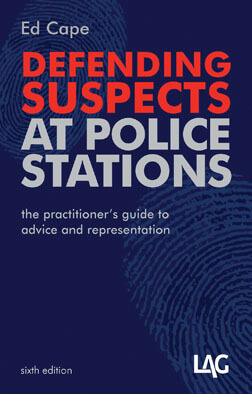
They are championed by Ed Cape no less. His opinion in this industry carries significant weight. He is the leading expert. He maintains they should be used.
Moreover, other significant academics and legal experts champion the cause. They are also recommended by Eric Shepherd in 'Police Station Skills for Legal Advisors'
The police training manuals forewarn police officers to expect Opening Statements. Some interviewing officers are expecting them and will invite
the legal adviser to make an Opening Statement. The CLAS and SRA Standards of Competence includes Opening Statement as a method for ensuring the proper conduct of an interview.
In Defending Suspects at Police Stations Ed Cape puts forward an outline for Opening Statements and recommends the lawyer should explain the following:- Explain the Role: to protect and advance my clients legal rights and to advise the client in interview where necessary.
- Formality: to address the client and rep with appropriate formality
- Comment or No Comment: "On my advice my client will/will not be answering questions. Please do not undermine my cleints decision or I will intervene."
- Reasons to intervene:
- the client asks for advice
- introduction of new undisclosed evidence
- any pressure put upon the client
- a break is necessary
- Summarise the disclosure
- Request more information:
- Ask for the purpose of the interview
- Ask for undisclosed evidence
- Whether there is sufficient evidence to charge
- Intentions post-interview
|
My opinion is just that: an opinion. Far be it for me to disagree with the real experts but I have several issues with the use of an Opening Statement.
Firstly, I simply cannot see the point. Interviewing Officers know full well what the solicitor is there for. They understand his role. I cannot see a
reason for spelling it out. If I intervene in an interview I do so when and if it is necessary.
My major issue though is with the risk to privilege. Opening Statements do not breach privilege. Saying my client will not answer questions is
not a breach. My worry is that at 3 o'clock in the morning we all say things we later regret. My concern is that a tired or inexperience rep
could easily say too much and inadvertently breach privilege. The statement is on a corridor of thought that might best be avoided as there are so
many doors that should remain locked.
It also occurs to me that clients do not always follow advice. If my client was advised to give a full comment interview but then
gives a no comment interview (or vice versa) has the Opening Statement undermined his position?
Another issue I have is that I cannot see a route to providing an Opening Statement in PACE. Code C 6D lays out the role of the solicitor in an interview,
| "The solicitor’s only role in the police station is to protect and advance the legal rights of their client. On occasions this may require the solicitor to give advice which has the effect of the client avoiding giving evidence which strengthens a prosecution case. The solicitor may intervene in order to seek clarification, challenge an improper question to their client or the manner in which it is put, advise their client not to reply to particular questions, or if they wish to give their client further legal advice." |
If the OIC says you cannot provide an Opening Statement what would I respond? I fail to understand how an Opening Statement is clarification, advice or a challenge.
Finally, we have been made aware of a candidate who used Opening Statements in their Portfolio. They were failed for using them. They are not taught on the courses. That decision is under review and hopefully will be reversed. Do please get in touch if you use Opening Statements. My gut feeling is that they are not used by many reps but if you do use them let me know what you say and why. | | |
|
| Back to Top ↑ |
| PORTFOLIO GUIDE |  The Portfolio will contain detailed studies of nine cases in which you have been involved with both the giving of advice, and attendance at an interview between the police and the client, at a police station. The Portfolio will contain detailed studies of nine cases in which you have been involved with both the giving of advice, and attendance at an interview between the police and the client, at a police station.
On registration, you will be issued with a copy of our regulations which will provide detailed guidance on the format, content and assessment criteria.
The purpose of the Portfolio is to:- Enable us to assess your competence to give advice in police stations
- Encourage you to consider and reflect upon your performance in the police station
- Encourage your supervising solicitor to review your competence and to take steps to address any deficiencies
The Portfolio consists of three stages, to be completed in two parts in the following chronological order:- 1. Part A Stage One - Two cases in which you have observed your supervising solicitor provide advice to a client in a police station.
- 2. Part A Stage Two - Two cases in which you have provided advice to a client in a police station whilst being observed by your supervising solicitor.
- 3. Part B - Five cases in which you have provided advice to a client in a police station unsupervised.
Part A
Part A consists of four cases and can be submitted at any time for a technical compliance check. The cases must be within three months of the date of submission. Following submission, an application is made to the Legal Aid Agency for a probationary PIN number.
When probationary status is received, candidates may undertake Part B of the Portfolio and the Critical Incidents Test. The probationary period is 12 months. Candidates have 6 months to pass either the Portfolio or CIT, failing this the PIN number is suspended until one assessment has been passed. The candidate then has a further 6 months to pass the outstanding element.
Part B
Part B is all nine cases and must be submitted within 12 months of the first case. There is a submission deadline each month; for the dates please download our timetable.
Supervision
All probationary and accredited representatives must have a recognised Supervising Solicitor at all times.For Part A of the Portfolio, you will be required to attend at the police station with a supervising solicitor. Signed, written feedback is required from the solicitor for stage 2 of Part A. Feedback sessions should also take place for Part B cases, although it is not mandatory to include these in the Portfolio submission.
It is the responsibility of the representative and the Supervising Solicitor to monitor the progress of the accreditation and successfully passing the assessments within the required timeframes.
The supervisor must be a current police station duty solicitor or, failing which, a solicitor who is acceptable to the Commission as meeting the Crime Category Supervisor Standard (including on a temporary basis) but not the Prison Law Supervisor Standard or the Criminal Cases Review Commission Supervisor Standard, and who must not have been suspended from supervising solicitor status under the General Criminal Contract. Please look at the firm's contract for further information.
Case Selection
Probationary representatives are only permitted to advise on own client cases with summary or either way offences. Part A Stage One cases may be duty referred and indictable matters, as these are dealt with by the Supervising Solicitor.
All cases must include an interview where the suspect is questioned by a Constable. A case involving co-defendants can only be included as one case study. The Portfolio should contain a good range of issues and offences which demonstrate to the Assessor your all round competence as a police station representative.
Portfolio Advice from the Assessment Board
Below is some general Portfolio advice from Datalaw’s Board of Assessors on issues that can cause candidates to fail.
Arrest:
An arrest always involves the deprivation of a suspect’s liberty, which is a serious imposition on their right to liberty. Candidates should ensure that in any reported case where their client has been arrested that they record and have tested:- The reasons for their client’s arrest as tested against section 24 of the Police and Criminal Evidence Act 1984 and Code G in terms of both reasonable suspicion and necessity;
- The reasons for their client’s detention tested against section 37 of the Police and Criminal Evidence Act 1984.
Candidates are expected to demonstrate an understanding of the grounds that must apply before an arrest can take place and what must be recorded by the arresting officer to justify that arrest. Where there are no proper grounds or inadequate recording of the reasons for arrest that assessors expect to see, that the candidate recognised the extent of those failings and took steps to challenge that arrest.
Detention:
The assessors have similar expectations in respect of detention.
Contact & Delay:
The General Criminal Contract requires contact to be made with a detained suspect within 45 minutes of notification being received from the DSCC. Such initial contact will usually be made by telephone. Case studies show that firms simply fail to record any attempt to provide initial telephone advice. Even when the initial call is attempted a high proportion recorded that the suspect was on rest and he was therefore not spoken to.
The assessors expect that candidates will be able to state the rules that apply to the provision of legal advice during a period of rest and the effect that such provision will have on the period of rest that is provided. The assessors also expect that candidates will retain control over their cases so as to avoid the possibility of unnecessary delay being caused by police inactivity during a period of rest. Any delay in dealing with the client should be properly explained by the candidate, for example:- Why was there a delay in the suspect arriving at the police station after his arrest? Any delay should be explained.
- If a suspect was transferred from one police area to another what effect does that have of the custody clock?
- If a suspect was transferred to hospital during his detention what effect does that have on the custody clock?
- Why was it necessary to place a suspect on a period of arrest - the fact that he was arrested at an anti-social hour is not in itself a reason to place a suspect on a period of arrest.
Inferring Knowledge:
The assessor’s task is to determine whether the candidate has sufficient knowledge and competence to pass the assessment process. They are not permitted to infer that the candidate possesses an understanding of matters raised within their case study that is not recorded within it.
The Golden Rule:
If a candidate wishes to pass this part of the assessment process the golden rule is for the candidate to ask themselves whether or not their case study raises an issue they have not dealt with and if so, to deal with it in the body of the case study. Supervisors can greatly assist candidates by pointing out all relevant procedural and contractual requirements to the candidate as part of the training element of this process.
This portfolio guide was provided by the lovely people at DataLaw, providers of accreditation and training courses. | | |
|
| Back to Top ↑ |
| TOP 10 PORTFOLIO TIPS | You've spent months working on your Police Station Portfolio, ensuring you've included as much detail as possible, you've stated the correct law, the client's details are anonymised and you've analysed every point. But so often we receive Portfolios in the office that are not technically compliant, with missing forms, insufficient dates or sections omitted.
If a Portfolio is received on a deadline day that is not technically compliant it can't be sent for assessment, meaning that a candidate has to wait another month to submit their work and potentially lose out on further work or risk having their PIN suspended. And if it is a Part A, it may mean the cases you've attended become out of date and you have to start the process again. Nightmare.
The content of your cases is most important; this is what you are assessed on and demonstrates your competence. But many candidates forget that the Portfolio is a professional document - submitting a neat, technically compliant piece of work is also crucial.
So here's 10 handy tips to follow to ensure the hard work you've put into your Portfolio doesn't go to waste. - Read the Regulations. That's it. All the info that you need is in one document. The Regulations have been (painstakingly) put together by our Accreditations Team to cover all aspects of the assessment process. Print out a copy and have it to hand when compiling your Portfolio.
- Highlight what is required. There's a lot of information in the Portfolio (which is all important) but just highlight the parts you need for the Portfolio to avoid being overwhelmed!
- Have your supervisor/colleague/partner check the Portfolio for you. When you've been working on something for so long, a fresh pair of eyes may spot something you've neglected.
- Double check. Before parcelling the Portfolio up, just have a quick check that everything is included and a rogue form hasn't fallen down the back of your desk. (It's happened to me).
- Secure your Portfolio by using treasury tags or binding. This looks neat and professional. If a Portfolio is sent as hundreds of loose pages, parts are easily lost by the Assessor (it also annoys them). Don't send your Portfolio in a ring binder, they're really heavy and will cost more in postage. They'll also break our Administrator's back taking them to the post office.
- Try not to submit your Portfolio when your cases are close to expiring. If something is missing and we have to send it back, it could mean cases fall out of date and you have to start the Portfolio again. No one wants that.
- Try not to submit the day before a deadline date. We get it, you don't want to rush your Portfolio and you have a lot of work on, but leaving your submission until the last minute will cause mistakes and omissions. There also won't be time to rectify these and you'll have to wait another month to submit.
- Send the Portfolio recorded delivery. Special, tracked, signed for. Things do get lost in the post and we have had candidates miss deadlines because of this, which is easily avoidable and out of our hands. And if you are sending it the day before the deadline, make sure it is guaranteed for next day delivery!
- Keep copies of your Portfolio cases and forms. Keep a hard copy. Keep a copy on your computer. Keep a copy on your mate's computer. Every Portfolio is returned by us. But again, these can go astray and be sat in a post room in your firm collecting dust. If you need to resubmit, you'll need a copy. So don't just rely on one of everything.
- Re-read the Regulations. Honestly, everything you need is in there. But if you're unsure of anything, get in touch. Even if it seems like a silly question, we've heard them all (believe me) and we're always happy to help.
These portfolio tips were provided by the lovely people at DataLaw, providers of accreditation and training courses. | | |
|
| Back to Top ↑ |
| CRITICAL INCIDENTS GUIDE | The purpose of Critical Incidents Test (CIT) is to assess your effectiveness in advising and assisting clients at the police station. The CIT takes the form of a role play assessment under exam conditions.
On registration, you will be issued with a copy of our regulations which will provide written guidance on the format, content and assessment criteria for the CIT.
Assessment Criteria
The CIT will be assessed according to the following criteria:
Content -This is concerned with the legal, procedural and factual content of your responses, including whether you have analysed the facts correctly and whether you have applied the law to those facts correctly.
Confidence - This is concerned with the extent to which you act with self-assurance in responding to the problem or issue posed.
Control - This is concerned with the extent to which you are able to demonstrate appropriate control in the context of the problem or issue raised.
In order to pass the assessment, you must achieve at least 50% on each criteria, in each scenario. The CIT can only be attempted by candidates who have been issued with and are in possession of an LAA PIN number OR those who are following the PSQ route without a PIN. There is no exemption from the CIT.
Assessment Format
The CIT comprises of a number of scenarios which will be presented to you on an audio tape. Issues will be posed to you, either verbally or in terms of their behaviour, by police officers, your client or third parties. You will be required to respond to the scenario audibly. An audio recording will be made of your responses. You will be assessed on the appropriateness of the responses provided, your oral communication and assertiveness skills.
The format of the test will follow the normal chronological order of a police station attendance from beginning to end and so the candidate can expect the scenarios to cover some of the following points:-- Initial telephone contact - either from the Defence Solicitor Call Centre, client or someone on behalf of the client.
- Initial attendance at police station - dealing with Custody Sergeant, examining custody record etc. Alternatively, attending with a volunteer.
- Disclosure – the Assessor is looking for your ability to obtain information that is relevant to the scenario presented.
- Attendance on the client which will include:-
- Obtaining relevant personal information, an explanation of the matter about which the client is to be interviewed, specifically, the offence and the elements to be proved; that which the police have outlined in disclosure and the client’s instructions.
- Advice regarding police procedure generally, the interview procedure, and the caution including the client’s options in interview.
- Advice regarding the appropriate course of action to be taken in the PACE interview.
- There may be specific queries raised by the client covering such topics as the taking of samples, identification procedures, drug testing, and procedure after interview.
- The PACE interview – there are likely to be several questions dealing with the interview and police conduct.
- Post interview - further issues in relation to conduct of the interview may need to be raised and representations made as to the way forward
- Potentially further issues in relation to police objection to bail.
Within the above scenarios, the marks will be specifically weighted to reflect the importance of information gathering from the police, from the client and the advice given to the client.
Please be aware if you do not engage with the role play element of the assessment or if you come out of role play during your responses, you will not score any marks for these questions.
This CIT guide was provided by the lovely people at DataLaw, providers of accreditation and training courses. | | |
|
| Back to Top ↑ |
| CRITICAL INCIDENTS TIPS | Many Probationary Police Station Reps feel that the Critical Incidents Test is the most difficult aspect of the accreditation; in fact there's always someone in your firm who'll tell you it's impossible to pass. But the CIT is simply assessing what you do every day when attending the police station, much of which is usually done without a second thought.
The purpose of the CIT isn't to trick or confuse you, it's your chance to show the Assessor your knowledge and skills as a representative. When you sit the CIT you'll be well under way as a probationary rep and attending the police station regularly, coming across various offences, clients and issues. Along with the experience you already have, here are some helpful tips on passing the Critical Incidents Test first time:
1. ARRIVE WITH TIME TO SPARE
All of Datalaw’s CIT assessments are held in the afternoon, allowing you ample time to catch the right train or avoid rush hour traffic on your way to the test centre. It's never nice to arrive late, flustered, dishevelled and needing the loo - but even more so when you're about to undertake an assessment. Ensure you give yourself ample time to arrive at the venue, catch your breath, use the bathroom and go over your notes. The invigilator will make sure you're comfortable before proceeding with the test, but you'll only provide more stress for yourself if you're not on time.
2. ORGANISE YOUR NOTES
You can bring any materials you think will be useful into the assessment - this includes text books, handwritten notes, pro-forma sheets, cue cards etc. The time you have to refer to these will be limited, so it's not advised to bring a suitcase full of stuff (which has happened) but rather compile organised and methodical materials. All of the questions that are asked in the CIT, you can answer; you're a probationary rep. and are used to dealing with these matters. The notes you bring should simply build upon knowledge you already have.
3. USE THE ALLOCATED TIME WISELY
At the end of each question you have 30 seconds to gather your thoughts and consult your notes before starting your answer. 30 seconds may not seem like a long time, but it is. The invigilator is timing this and will give you an indication when 20 seconds are up, so it's not going to creep up on you unexpectedly. Use this allocated time to your advantage - you may know how to answer the question straight away, which is great, but just give yourself a head start by opening the correct page of PACE or turning to the relevant section of your notes so you don't have to do this in the middle of your answer. Even if you don't need to consult any notes, just take the time to think through what you're about to say.
4. REMEMBER TO STAY IN ROLE PLAY
A candidate can be doing really well, answering all questions calmly and professionally, but if they come out of role play at any point the assessment is a failure. Coming out of role play includes such things as asking the invigilator to explain something (they are not permitted to do so), saying 'I would speak to the client and tell them...' or 'I am now going to tell the police...'. You have to imagine, as much as possible, that you are speaking directly to the person on the tape. Each question will make it clear who you are addressing e.g. your client, custody officer etc. so you simply have to pretend that you are speaking to them as though they are sitting in front of you.
5. REMAIN CALM
Nerves can get the better of all of us, but with adequate preparation and forethought there is no reason this should happen during the CIT. The invigilator will explain everything that is going to happen, in as much detail as you require. They will answer any questions you have and are very good at making you feel at ease during the process. We would always recommend practicing some CIT scenario questions beforehand with a colleague or a friend - Datalaw offer an online comprehensive support course which includes two recorded lectures, numerous CIT scenarios and an audio recording of a CIT which you can use as a mock exercise. The more knowledge you have about what you are likely to come across, the more calm you will be during the test.
Good luck, don't fret, and get in touch if you have any questions about the CIT.
These CIT tips were provided by the lovely people at DataLaw, providers of accreditation and training courses. | | |
|
| Back to Top ↑ |
| WRITTEN EXAM GUIDE | The purpose of the Written Exam is to assess your understanding of the representative’s role in the police station and the skills that are needed to perform that role effectively. Your knowledge and understanding of criminal law, evidence, practice and procedure will also be assessed.
Upon registration, candidate are issued with a copy of our regulations which provide detailed guidance on format, content and assessment criteria. The Written Exam must be passed prior to undertaking of Part A of the Portfolio.
Exemptions
The Legal Aid Agency provides exemptions from the Written Exam; these are available to:- Those who have completed the Legal Practice Course
- Fellows or members of the Institute of Legal Executives (ILEX) who have passed the Institute’s Level 4 Professional Higher Diploma in Law (previously known as the Part 2 examinations) which must include the Criminal Law and Litigation papers
- Those who have completed the Bar Professional Training Course
If you are unsure of your exemption you are advised to contact the Legal Aid Agency.
Assessment Format
The Written Exam is a two hour assessment which consists of five questions. Each question is worth 25 marks. You will be required to attempt four questions of the five questions set. If a fifth question is answered, it will not be marked. Questions can be answered in any order. In order to pass the Written Exam you must score at least 50%.
DataLaw holds exams every month, for locations and dates please download our timetable.
Examination Topics
The Written Exam will assess your understanding of, and ability to, explain to a client relevant law and procedures drawn from the major areas listed below:- Substantive criminal law
- The treatment of persons in custody
- The conduct of police interviews
- The evidential significance of facts or of things said or not said
- Police powers outside the police station
- The criminal process
The assessment is 'open book'. You may take text books, printed versions of books/guidelines and on-line materials purchased from Datalaw into the assessment. These support materials can be highlighted and/or underlined but cannot be annotated.
Due to the time restraints, candidates are advised not to spend too much valuable time on detailed or lengthy research.
Suggested Reading
The following books have been recommended by our candidates:- 'Blackstone’s Police Operational Handbook' - Ian Bridges, Fraser Sampson and Police National Legal Database (PNLD)
- 'Defending Suspects at Police Stations: The Practitioner’s Guide to Advice and Representation' – Ed Cape
- 'Advising a Suspect at the Police Station' – Anthony Edwards
- 'Police Station Skills for Legal Advisors' – Eric Shepherd
- 'Police Station Advisor’s Index' – Brian Spiro and Stephen Bird
| MORE INFORMATION |
You will be assessed against the SRA’s Standards of Competence. Its well worth reading. |
Candidates would also be well advised to read this Law Society guide by Ed Cape. Its an excellent discussion on adverse inferences from no comment interviews. | | If you have found any books or materials not listed here that were useful during your accreditation, please let us know so we can add to this list. |
|
This written exam guide was provided by the lovely people at DataLaw, providers of accreditation and training courses. | | |
|
| Back to Top ↑ |
| CARDIFF GUIDANCE PAPER | | |
Cardiff Guidance Notes
This is a useful guide from Cardiff who are one of the providers for course and exams. It is well worth reading and covers the whole process. |
| | |
|
| Back to Top ↑ |
| SAMPLE PAPERS | | If you have any sample exam papers do please forward them to us. | | | |
|
| Back to Top ↑ |
|
| Back to Top ↑ |
| | If you found our site useful please feel free to donate to help us keep it going. | |
|
| Back to Top ↑ |
 xls
xls ods
ods



 Bugger Boris. Do not over claim travel costs. The LAA are on the prowl.
 10 Steps to Become a Police Station Rep. Everything you need to know.
 Double Fees. The best Double Bubble guide on the web!
 Wiki. Looking for legal updates? Check out our new wiki
 The 3 things every rep needs to know about mileage and how to claim it
 This is what 1500 reps look like on a map. Where are all the Reps?
 The Fat Cats Stats. Updated. How much money is your firm earning? Who is Making Crime Pay?
 How Much for an Interview? A complete list of all the police station rates.
 The Escape Fee Calculator is easy to use and will save you plenty of time
 No Comment featured in the Parliamentary Review 2018
 Get Compliant Quick! You are liable for the firms errors. Get protected with our tool kit.
 Essential law for reps. Just the useful stuff in plain English
 Visit us on Facebook. Feel free to poke us, wave at us and get social
 Articles, Blogs & Ideas. The thoughts and ideas of a police station rep.